
Best Class in Ruins of Myth Drannor: Role-by-Role Pick
Compare all eight classes in Ruins of Myth Drannor by party job—tank, healer, traps, and arcane output—using manual and FAQ sources.
FAQ
What is the strongest class in Ruins of Myth Drannor?
Can you skip the Rogue?
Are Cleric and Paladin interchangeable?
Does the 2026 remaster change class balance?
Who picks feats and skills on level-up?
How should you judge “best” in this game?
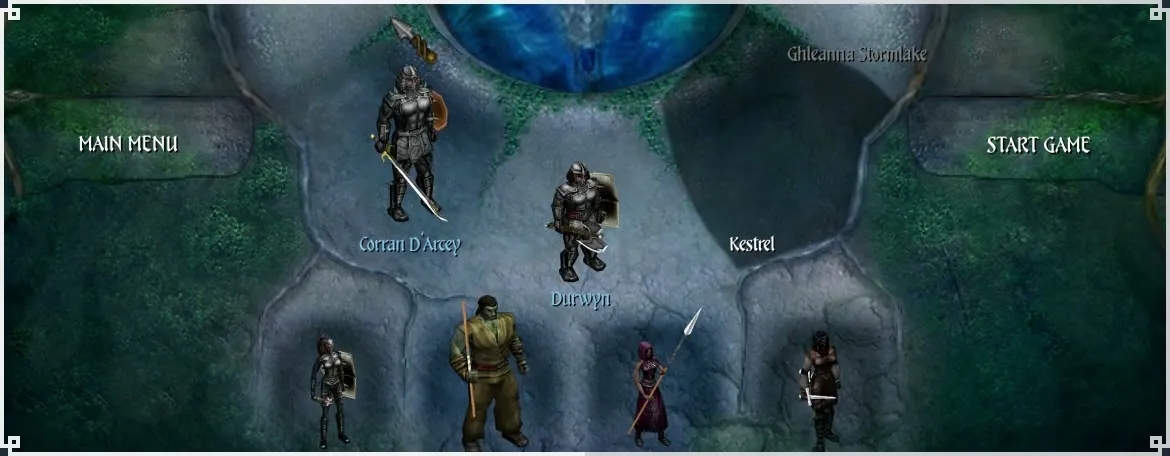
Pool of Radiance: Ruins of Myth Drannor expects a six-hero squad with traps, undead, and long fights—not a solo power fantasy. “Best class” really means best fit for a job: who stands in melee, who heals, who disarms chests, and who throws Fireball when the log says you missed again. Steam’s feature list still advertises D&D 3rd Edition rules with a level 16 cap and 90+ spells (checked 2026-11-07).
Below we compare all eight classes on those jobs using the fact library (manual OCR, FAQ, GameTruth). Editorial analysis only—we have not verified outcomes in the remaster.
Which class holds the front line?
Fighter is the straightforward pick: martial and simple weapons, all armor, shields, d10 hit die (manual Table 1-2). No built-in magic—just attacks and Combat Options like Power Attack (GameFAQs controls guide, Original). GameTruth (2026-11-06) still recommends a shield Fighter for new remaster players.
Barbarian adds Rage (+4 Str and Con for a few rounds, manual) and a d12 hit die but cannot be Lawful—bad pairings with Monk or Paladin in the same party. Half-Orc favors Barbarian (manual favored class). Community posts mention Barbarian 2 / Cleric for extra HP and BAB (Original forum).
Paladin is Lawful Good only, with Lay on Hands, Smite Evil once per day, Turn Undead at 3rd level, and spells from 4th (manual). Divine Grace adds Charisma to all saves—strong but alignment-locked. Default party presets in the GameFAQs walkthrough swapped a human Paladin for Fighter in the template party (Original).
Monk wants high Dexterity and Wisdom armor bonuses but loses them in armor (manual). Stunning Attack scales with monk level; good for controllers, not for “stand in the doorway in full plate.” Lawful only.
Verdict (editorial): Fighter is the lowest-friction tank. Paladin and Barbarian win on flavor and bursts if you accept alignment and party-planning constraints. See /classes/fighter-build/ and /classes/paladin-build/ for stat focus.
Who keeps the party alive against undead?
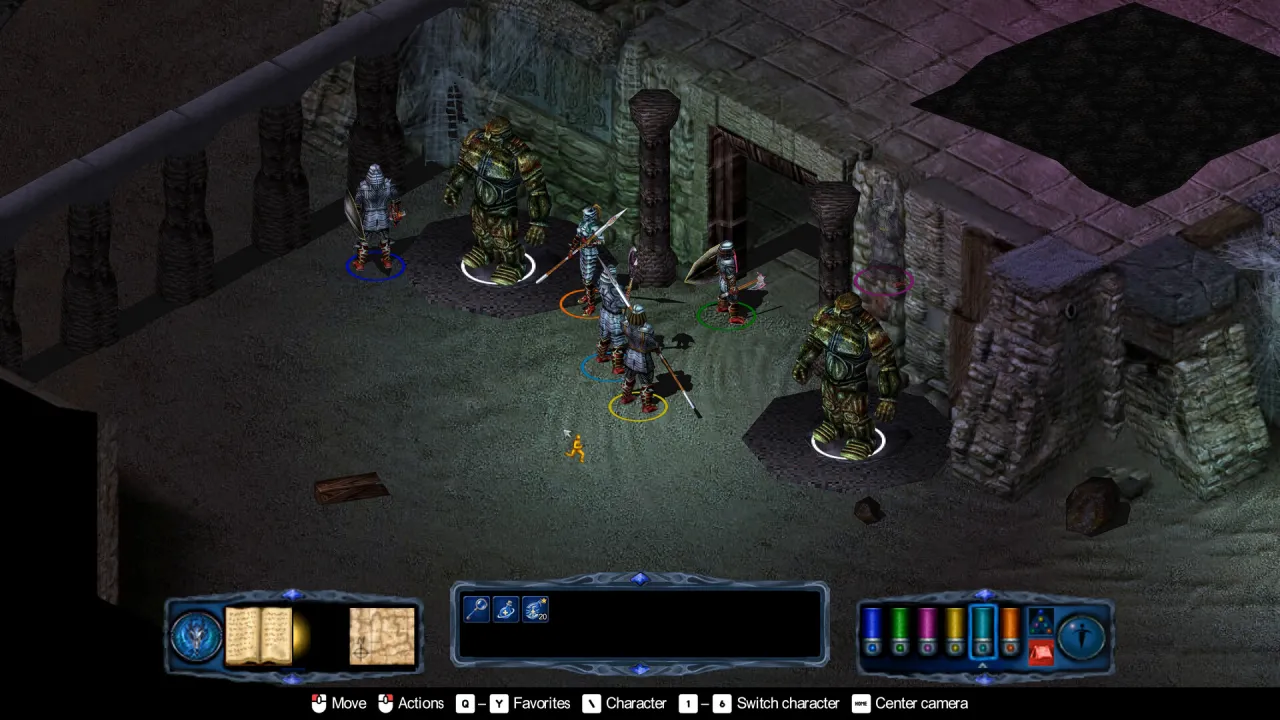
Cleric is the main healer: divine spells from level 1, armor plus shield, Turn Undead via Combat Options (manual; FAQ). Spells at each level are granted automatically—you do not pick from a list like a Sorcerer. Wisdom drives casting; Charisma affects turning. Walkthrough notes warn Turn fails on many powerful undead types (Original AIssil hints).
Paladin layers healing and situational smites but casts fewer and later spells than a dedicated Cleric. Paladin 2 / Cleric x is a frequent Original community pair for martial weapons on a Cleric (forum 80542122)—multiclass risk is covered in /classes/multiclass-guide/.
Ranger gains divine spells only at level 4 (manual)—too slow to be your only healer in the first dungeon layers.
Druid does not exist in this ruleset (Sorcerer’s Place FAQ lists eight classes only).
Verdict (editorial): Cleric is the only created character that reliably covers healing and undead pressure from level 1. Paladin supplements; Ranger is a late additive.
Who must handle locks, traps, and scouting?
Rogue is non-optional for mechanics unless you outsource to a companion. Open Lock and Disable Device are Rogue-only active skills; trap Search on objects is Rogue-only though travel Search runs for the party (manual §Search; GameTruth 2026-11-06). Sneak Attack rewards flanking and flat-footed targets but undead and constructs are immune (manual).
Ranger offers martial flexibility and later spells but cannot replace Rogue skills. Rogue / Ranger splits appear in Computer Show’s old walkthrough and in companion Bronwyn (Original).
Verdict (editorial): Rogue (or recruited Tudo) is mandatory for a self-sufficient party. Dexterity and Intelligence both feed the skill checks GameTruth emphasizes.
Who delivers arcane damage and buffs?
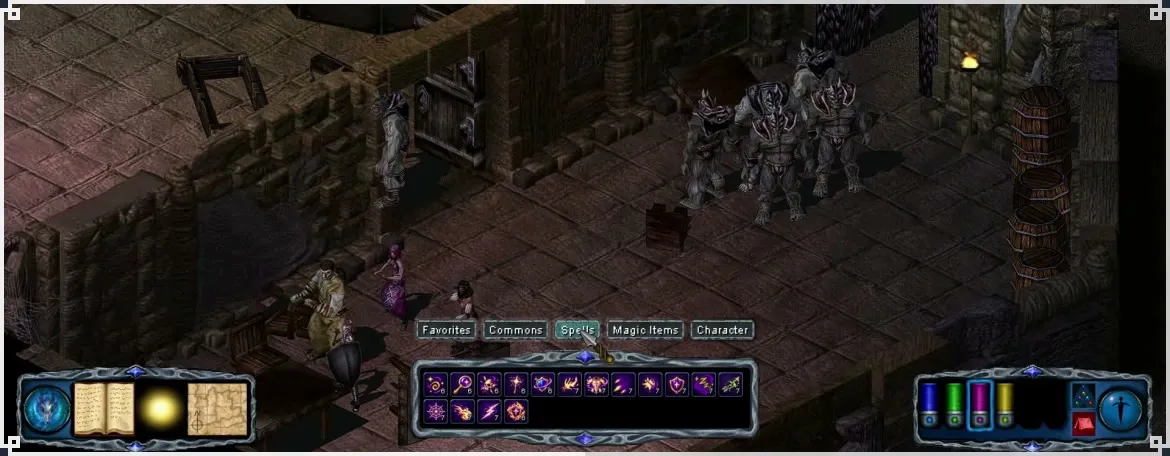
Sorcerer is the only arcane full caster in the eight-class list. Charisma sets DCs and slots; armor imposes arcane spell failure (manual). The handbook says Sorcerers choose new spells when they gain levels (manual; Chuck Yager FAQ)—Unverified in the remaster whether that UI survived automatic feat/skill reports on Steam Demo threads.
Early picks cited by GameTruth: Magic Missile (reliable damage) and Mage Armor (+4 AC on unarmored casters). Fireball and Haste arrive in higher slots (manual lists; Original keymaps).
No Wizard class—Sorcerer is your only player-built arcane engine unless you multiclass Kellan-style hybrids from companions.
Verdict (editorial): Sorcerer is the best arcane DPS/support class by default because it is the only one. Skipping it means leaning on items, palettes, or companion Jarial (joins at level 13 Sorcerer in Original data—late).
What about Monk, Ranger, and Barbarian in a six-man roster?
These three shine as second or third characters, not always as replacements for the core four:
| Class | Standout tool | Main friction |
|---|---|---|
| Monk | Evasion, Stunning Attack, scaling unarmed damage | Lawful; armor shuts down class AC |
| Ranger | Favored Enemy, martial weapons, spells at 4+ | No trap skills; slower casting |
| Barbarian | Rage burst damage, fast movement | Non-Lawful; weak social casting stats |
Monk / Rogue and Monk / Paladin / Sorcerer show up in Original forum builds (80542122) but demand lawful alignments and careful XP pacing. Barbarian / Cleric (“wild cleric” anecdotes) needs a non-LG cleric path—contradicts Paladin-heavy parties.
For a first campaign we still align with /guides/best-party/: build Fighter, Cleric, Rogue, Sorcerer, then let companions carry Monk-like or Ranger niches if you want variety without splintering XP on day one.
Quick reference: all eight classes by party job
| Class | Front line | Healing / Turn | Locks / traps | Arcane | Alignment note |
|---|---|---|---|---|---|
| Fighter | Strong | — | — | — | Any |
| Barbarian | Strong | — | — | — | No Lawful |
| Paladin | Strong | Partial | — | Partial (late) | Lawful Good only |
| Monk | Medium | — | — | — | Lawful only |
| Cleric | Medium | Strong | — | — | Any |
| Rogue | Weak | — | Only | — | Any |
| Ranger | Medium | Late | — | — | Any |
| Sorcerer | Weak | — | — | Only | Any |
Sources and what we haven’t verified
Sources: Sorcerer’s Place FAQ (classes, 3E basis); Manualzz manual OCR via romd-facts-F-classes.md; GameTruth party guide (2026-11-06); GameFAQs AIssil (controls, Original); Steam store Features (2026-11-07); GameFAQs board 80542122 (Original multiclass anecdotes).
Unverified in the remaster: Relative power of auto-granted feats/skills; Sorcerer spell-pick UI; whether Turn Undead or Sneak Attack frequencies feel the same as 2001; any hidden class stat tweaks without patch notes; Legacy Mode effects on class growth (see /guides/legacy-mode/).
Related Articles
classes
Cleric Build — Ruins of Myth Drannor
Cleric build guide for Pool of Radiance: Ruins of Myth Drannor—point buy, divine spells, Turn Undead, and party healing in the 2026 remaster.
classes
Fighter Build — Ruins of Myth Drannor
How to build a Fighter in Pool of Radiance: Ruins of Myth Drannor: stats, race picks, front-line role, and what the 2026 remaster still auto-assigns.
classes
Monk Build — Ruins of Myth Drannor (Lawful)
Monk build advice for Pool of Radiance: Ruins of Myth Drannor—Wisdom, Dexterity, armor rules, Stunning Attack, and lawful party planning in the remaster.
Was this helpful?
Thanks for the feedback!