
Character Creation in Ruins of Myth Drannor
Create heroes in Ruins of Myth Drannor: races, classes, alignment gates, 25-point abilities, and casting requirements from sourced rules.
FAQ
How many races and classes can you pick?
How does point buy work?
What ability score do Clerics and Sorcerers need to cast?
Does alignment restrict classes?
Are there premade characters?
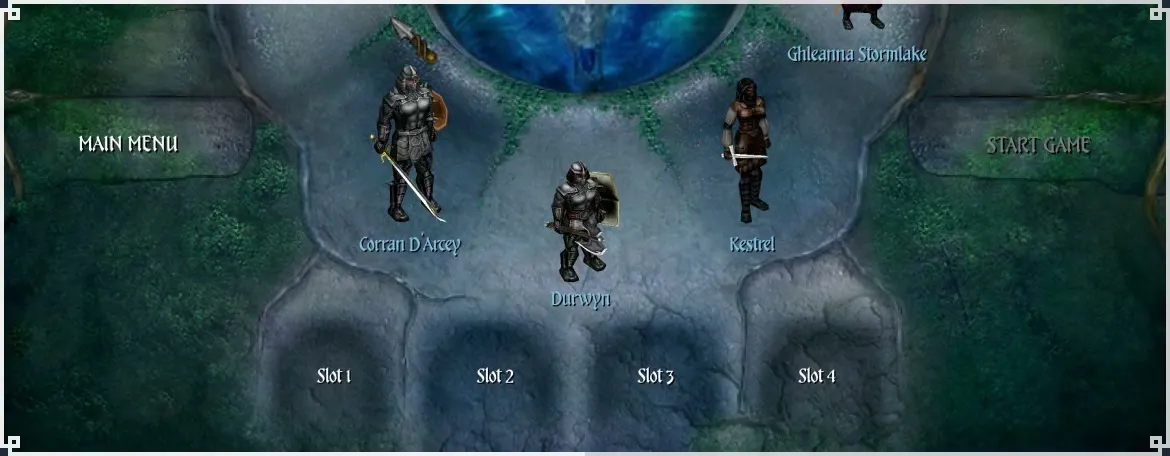
Where does character creation happen in the flow?
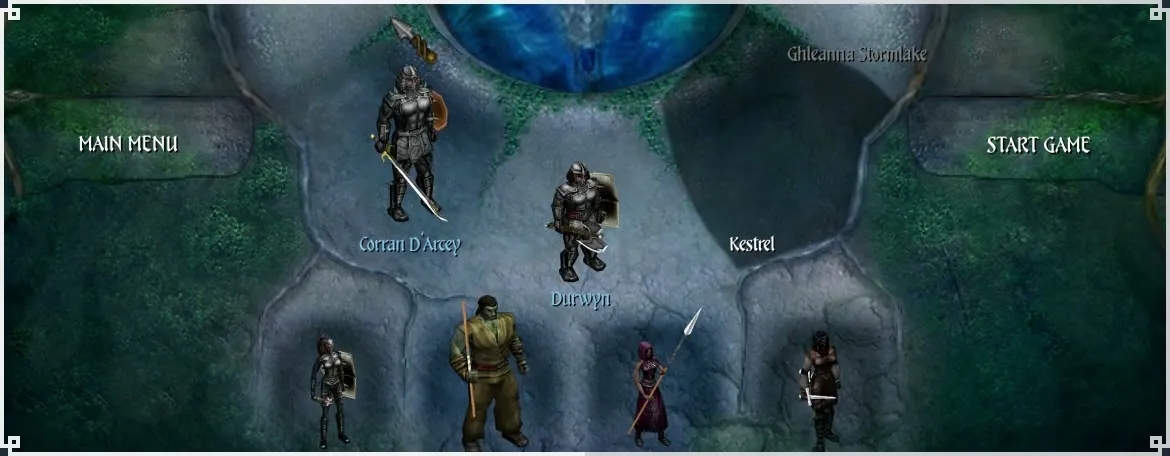
From the main menu, Single Player → New Game opens the Character Roster (GameFAQs AIssil Party Creation, Original (2001)). You build up to four heroes with New Character, then Add to Party for each before Start Game. Two companion slots stay empty for recruits later (FAQ; Steam copy). The remaster trailers show the same roster stone platform UI (Unverified in the remaster that every button label matches).
Premade default characters exist in the Original walkthrough—often a human-flavored Paladin, Sorcerer, Cleric, and Rogue lineup matching the manual’s four-role advice. Using defaults is fine for a quick start; see /guides/best-party/ if you prefer a custom Fighter instead of the template Paladin.
What order do the creation screens use?
GameFAQs lists this sequence for Original (2001):
- Race
- Class
- Alignment (limits which classes remain valid—sheet enforces restrictions)
- Ability scores (point buy)
- Details (name, voice, portrait, etc.)
Unverified in the remaster: Step order and whether alignment still sits before abilities. Sorcerer’s Place FAQ confirms alignment gates classes but does not reproduce the full matrix beyond Paladin/Monk/Barbarian rules.
If you pick Paladin then try a non–Lawful Good alignment, expect the sheet to block confirmation (manual). Same for Monk (Lawful only) and Barbarian (no Lawful alignments).
What racial bonuses and movement apply?
GameTruth (2026-11-06) publishes adjustments consistent with D&D 3E and the Sorcerer’s Place race list (Unverified in the remaster in isolation):
| Race | Ability adjustments | Base speed |
|---|---|---|
| Human | None | 30 ft |
| Dwarf | +2 Con, −2 Cha | 20 ft |
| Elf | +2 Dex, −2 Con | 30 ft |
| Half-Elf | None | 30 ft |
| Half-Orc | +2 Str, −2 Int, −2 Cha | 30 ft |
| Halfling | +2 Dex, −2 Str | 20 ft |
Apply racial modifiers after point-buy on the ability screen (standard 3E practice; GameTruth examples show post-buy totals like Dwarf Fighter Con 16).
Slower 20 ft front liners need tighter positioning so Rogues and Sorcerers are not exposed before melee engages—a reason Human or Elf often fill Cleric/Sorcerer slots while Dwarf/Halfling cover Fighter/Rogue in mixed parties.
Favored classes for XP penalties later: Dwarf → Fighter, Elf → Sorcerer, Half-Orc → Barbarian, Halfling → Rogue, Human/Half-Elf → highest-level class (manual Table 1-1). Details in /classes/multiclass-guide/.
How do you spend the 25 ability points?
All six abilities start at 8. You receive 25 points to raise them. GameTruth documents steeper costs near the cap:
- Each increase that lands on 15 or 16 costs 2 points (per step).
- Each increase that lands on 17 or 18 costs 3 points (per step).
- Each increase from 9 through 14 costs 1 point per step above the previous score—derived by matching GameTruth’s published 25-point builds (2026-11-06).
You must spend the full budget before leaving the screen (GameTruth). Some spellcasting classes pre-fill the casting ability; you may move those points elsewhere per the same guide (Unverified in the remaster).
Casting requirement: score of 10 + spell level in Wisdom (Cleric) or Charisma (Sorcerer). Level-1 spells need 11 minimum before racials. Higher rings need higher stats and class levels that grant those slots (GameTruth; manual spell lists).
Example 25-point array for a human Cleric before racials (calculated from the point-buy rule reported by GameTruth (2026-11-06)): Str 10, Dex 10, Con 14, Int 9, Wis 16, Cha 12—prioritizes Wisdom 16 for early levels while keeping Con 14 for survival.
Full four-character tables sit on /guides/best-party/ alongside Fighter, Rogue, and Sorcerer spreads.
At total levels 4/8/12/16 you may add +1 to any ability (manual Ch.4)—creation is only the starting point.
Which alignments can each class use?
Manual Table 1-4 (Manualzz OCR, Original (2001)) lists:
| Class | Alignment restriction |
|---|---|
| Barbarian | Not Lawful |
| Cleric | Any |
| Fighter | Any |
| Monk | Lawful only |
| Paladin | Lawful Good only |
| Ranger | Any (manual; differs from some tabletop variants) |
| Rogue | Any |
| Sorcerer | Any |
RPG Classics claims alignment barely affects NPC reactions (community, Original). Paladin still mechanically enforces LG.
Gap: Full lawful/chaotic good-evil grid versus every class is not in our fact set—only the rows above are safe to assert. Chaotic Clerics are allowed by the manual; pairing them with Paladin party members is a role-play choice, not a build error.
What should you set on the details screen?
The walkthrough mentions naming, portrait, and voice on the final sheet (Original). No fact source documents biography text affecting stats. Unverified in the remaster: Cosmetic options and whether Legacy Mode defaults affect portraits.
After creation, add characters to the roster, pick /guides/beginner-guide/ settings (Legacy, turn timer), and plan companion gaps via /guides/companions/.
Sources and what we haven’t verified
Sources: GameFAQs AIssil walkthrough §Party Creation and §Character Sheet (2002); Sorcerer’s Place FAQ (races, classes, alignment mention); GameTruth party guide (2026-11-06) for racial table, point-buy costs, casting formula; Manualzz Table 1-4 and Ch.4 (OCR 2026-11-07); Steam store party-size text (2026-11-07).
Unverified in the remaster: Entire creation UI parity; default character roster; pre-filled Sorcerer/Cleric point blocks; complete alignment matrix beyond the three hard gates; whether Rangers or Clerics gained hidden alignment limits.
Related Articles
classes
Best Class in Ruins of Myth Drannor: Role-by-Role Pick
Compare all eight classes in Ruins of Myth Drannor by party job—tank, healer, traps, and arcane output—using manual and FAQ sources.
classes
Cleric Build — Ruins of Myth Drannor
Cleric build guide for Pool of Radiance: Ruins of Myth Drannor—point buy, divine spells, Turn Undead, and party healing in the 2026 remaster.
classes
Fighter Build — Ruins of Myth Drannor
How to build a Fighter in Pool of Radiance: Ruins of Myth Drannor: stats, race picks, front-line role, and what the 2026 remaster still auto-assigns.
Was this helpful?
Thanks for the feedback!