
How to Play Ruins of Myth Drannor (Beginner Guide)
First-hour setup and play tips for the 2026 remaster: Legacy UI, turn timer, party basics, and how it differs from the 1988 Gold Box game.
FAQ
Do I need to play the 1988 Pool of Radiance first?
What should I change in settings before my first fight?
How big is the party at the start?
Is this the same game as the 1987 Gold Box Pool of Radiance?
How long is a full playthrough?
What is Pool of Radiance: Ruins of Myth Drannor?
Pool of Radiance: Ruins of Myth Drannor (often shortened to RoMD) is a party-based, turn-based CRPG built on D&D 3rd Edition rules. Stormfront Studios shipped the Original (2001) PC release; SNEG published a Remaster (2026) on Steam and GOG on 2026-11-06 that keeps the same core campaign while adding resolution, UI, and input options (Source: Steam store page, checked 2026-11-07). You explore dungeon hubs around Myth Drannor, fight in tactical rounds, and level characters to a 16-level cap with 8th-level spells on spellcasters (same store listing).
This beginner guide stays spoiler-free: no story beats, boss names as plot points, or area walkthrough order. For structure after you are comfortable, see the walkthrough overview.
Is this the 1988 Gold Box Pool of Radiance?
No. The 1987/1988 Pool of Radiance on Gold Box platforms is a different game and era. Ruins of Myth Drannor is a late-2001 title with 3E mechanics and real-time exploration plus turn-based combat (Source: Sorcerer’s Place FAQ, 2001). Gaming.net’s remaster tips explicitly warn newcomers not to mix the two names (2026-11-06). You do not need any earlier Pool of Radiance product to start (FAQ, 2001).
What should I tune in the first ten minutes?
Store copy and day-one guides agree: spend a few minutes in options before you commit to a long session.
| Setting | Practical starting point | Source note |
|---|---|---|
| Legacy mode vs modern enhancements | Try default first; switch to Legacy if you want original gameplay and presentation preserved (Remaster 2026). | Steam store page |
| Turn timer / timed turns | Off (unlimited) while learning actions and tooltips | Gaming.net 2026-11-06; AIssil combat hints (Original 2001) |
| Action bar and tooltips | Leave enhanced bar and extra tooltips on unless Legacy replaces them | Steam store page |
| Camera and combat animation speed | Lower animation speed if fights feel sluggish; adjust camera with remaster camera controls | Steam; Gaming.net |
| Keyboard/mouse vs controller | Full gamepad support is advertised—pick one scheme early for muscle memory | Steam Features, checked 2026-11-07 |
Exact menu names for each toggle in the Remaster (2026) are Unverified in the remaster beyond what the store page lists. For a dedicated Legacy walkthrough, read Legacy mode. Combat timers and animation are expanded in combat settings.
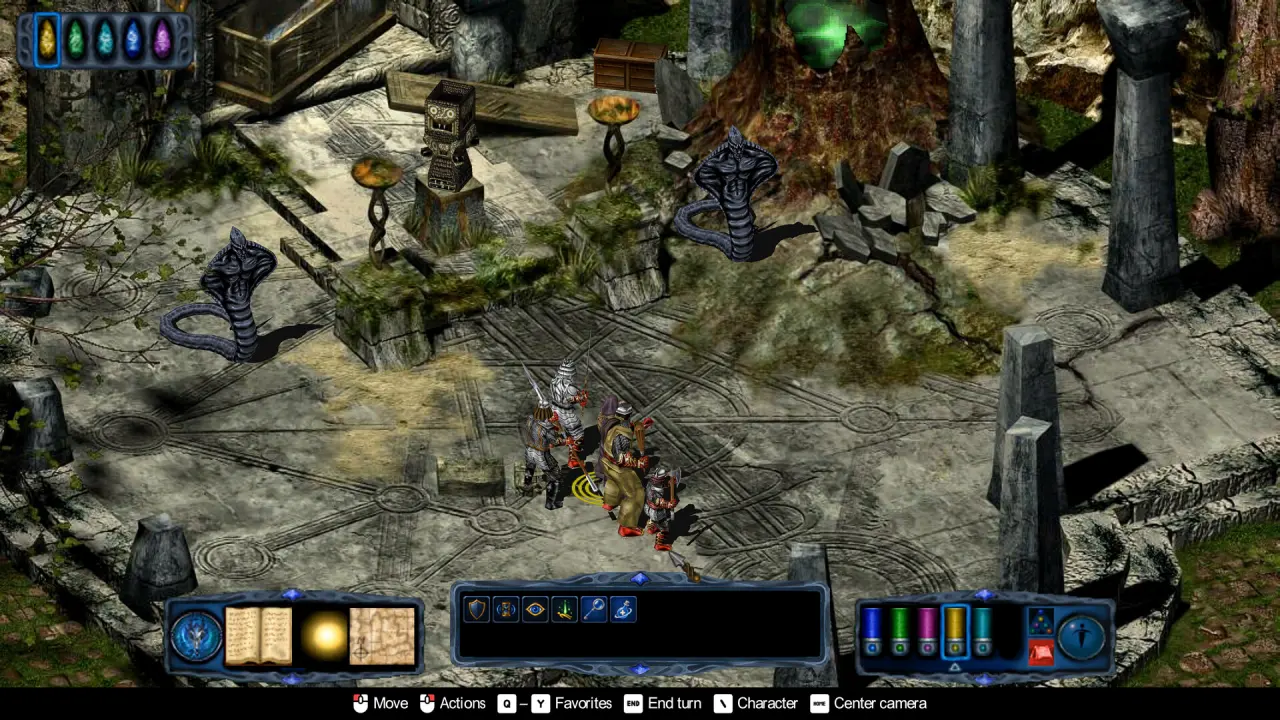
How to play Ruins of Myth Drannor: your first hour
Facts we can cite without spoiling the plot:
- Finish character setup — You roll up to four created heroes. The game supports Default characters in the Original (2001) walkthrough (GameFAQs AIssil, 2002). The remaster creation flow is Unverified in the remaster step-by-step; see character creation when you need point-buy numbers.
- Use a balanced four-class core — Community guides for the 2026 release recommend Fighter, Cleric, Rogue, and Sorcerer for roles (tank, healing, skills, arcane damage) (GameTruth party guide, 2026-11-06). Our best party page explains why, without copying a full build order.
- Learn exploration controls — Every class has Search as a class skill, but only Rogues can use Open Lock and Disable Device, and only Rogues use Search to find traps on objects (Manualzz §Search, Original 2001; GameTruth 2026-11-06 aligns on Rogue-only trap detection). In travel mode the party auto-Searches while moving (Original 2001 manual; remaster UI Unverified in the remaster). Walk when you are unsure; save before risky doors.
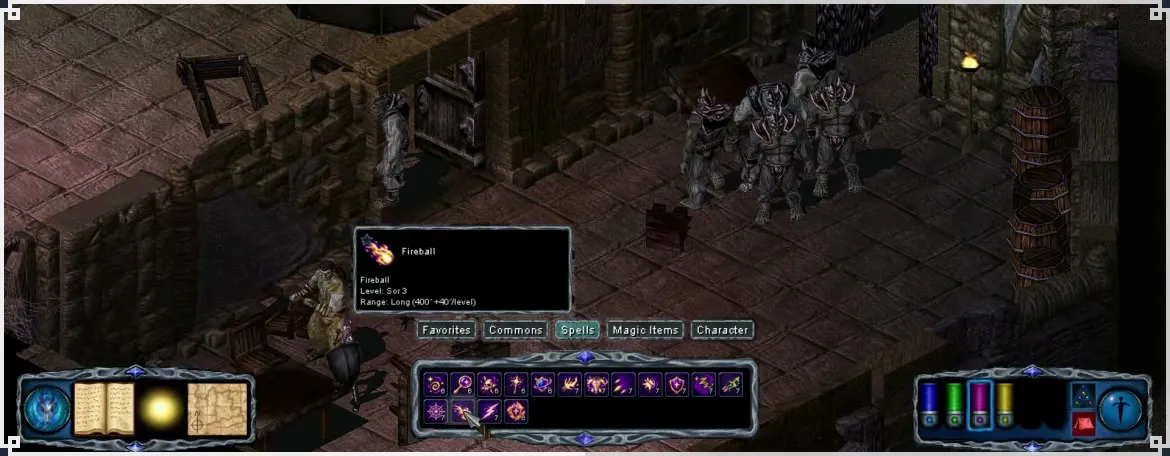
- Read combat feedback — Initiative order, attack rolls, and action points show in the on-screen log and bars (visible in official remaster screenshots). Open the Spells tab on the action bar when you prepare casters (multiclass guide later if you branch).
- Expect a long campaign — Official materials cite about 100+ hours for completion (Original 2001 FAQ). Pacing in the remaster is Unverified in the remaster.
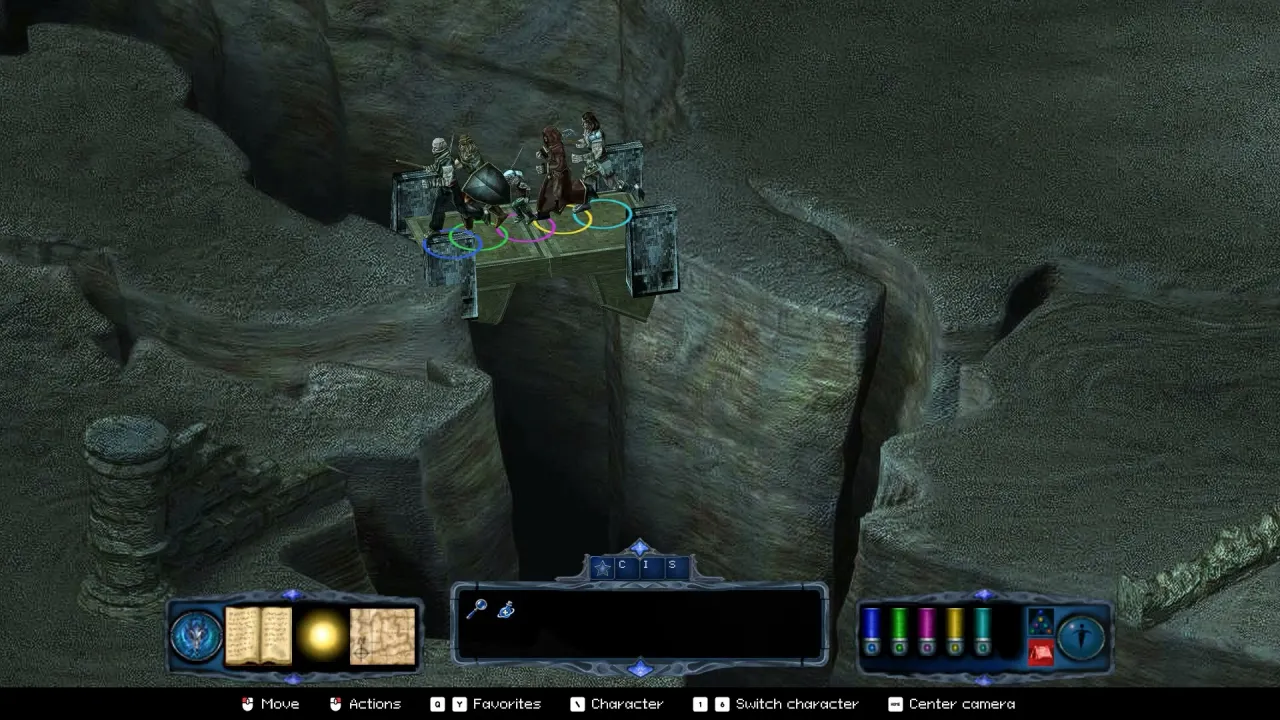
Keyboard, mouse, or controller?
The Remaster (2026) lists full controller support and reworked camera control on Steam (checked 2026-11-07). GOG lists controller support as well. Gaming.net suggests trying both input methods early in a short session (2026-11-06). Steam Deck compatibility is discussed on Steam Deck and controller; Valve had not assigned an official Deck Verified rating as of our store check.
How hard is it for a new CRPG player?
Original (2001) reputation: lengthy fights, many undead encounters, and stingy hit chances—walkthrough authors advise turning off timed turns, fighting at doorways, and using frequent reloads where the design allows (AIssil combat hints, 2002). That tone still informs player reviews on Steam and GOG after the remaster launch (community opinion, not a difficulty slider fact).
The remaster adds optional timed turns (Steam) but does not advertise a new “story mode.” Treat difficulty as system mastery + patience, not action reflexes. ESRB rates the game Mature 17+ for violence (Steam, 2026).
Where should I go next on this wiki?
- Best party — role coverage and companion timing (editorial, sourced tables).
- Remaster vs original — what changed in 2026 versus patching the 2001 disc.
- Worth it? — price, review snapshots, and fit before you buy.
- Tips and tricks — meta habits that survive from Original (2001) guides.
Sources and what we haven’t verified
Sources: Steam store app 4834760 (2026-11-07); Gaming.net beginner tips (2026-11-06); Sorcerer’s Place PoR2 FAQ (2001); GameFAQs AIssil walkthrough (2002); GameTruth party guide (2026-11-06).
Unverified in the remaster: Full Settings menu map; every Legacy sub-option; character creation UI parity with 2001; remaster-specific balance or tutorial changes; whether all 2001 multiplayer or random dungeon modes exist (Steam lists single-player only).
Related Articles
classes
Best Class in Ruins of Myth Drannor: Role-by-Role Pick
Compare all eight classes in Ruins of Myth Drannor by party job—tank, healer, traps, and arcane output—using manual and FAQ sources.
classes
Cleric Build — Ruins of Myth Drannor
Cleric build guide for Pool of Radiance: Ruins of Myth Drannor—point buy, divine spells, Turn Undead, and party healing in the 2026 remaster.
classes
Fighter Build — Ruins of Myth Drannor
How to build a Fighter in Pool of Radiance: Ruins of Myth Drannor: stats, race picks, front-line role, and what the 2026 remaster still auto-assigns.
Was this helpful?
Thanks for the feedback!