
Best Party in Pool of Radiance: Ruins of Myth Drannor
Party setup for Ruins of Myth Drannor: the four created roles, companion slots, and 25-point builds from verified sources (editorial).
FAQ
What is the best starting party in Ruins of Myth Drannor?
How many characters can you control?
Should you multiclass your starting Cleric or Sorcerer?
Do racial bonuses change the recommended party?
Are companion levels fixed in the 2026 remaster?
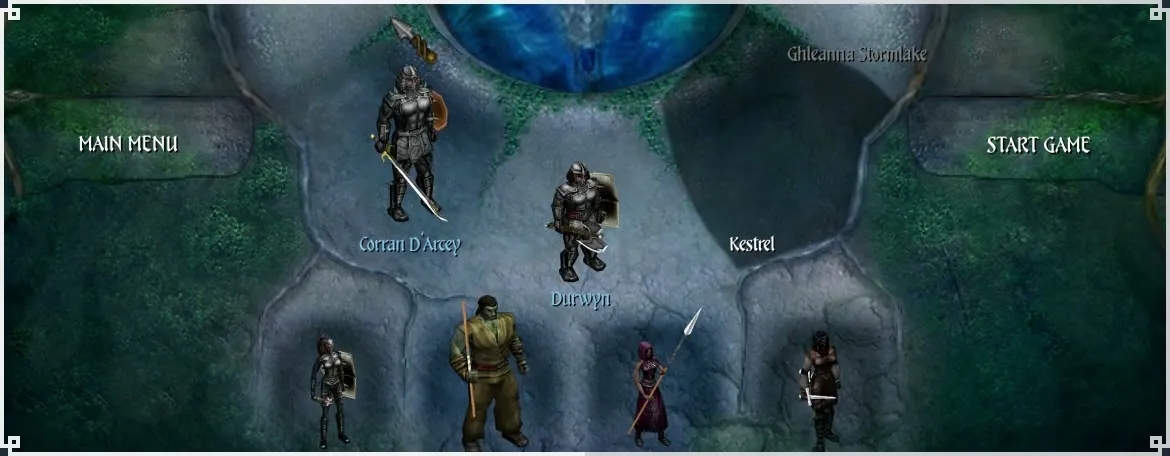
Why split the four created slots across four roles?
Pool of Radiance: Ruins of Myth Drannor is a long, trap-heavy dungeon crawl where undead show up often and doors stay locked until someone with the right skills walks up. The Sorcerer’s Place FAQ and the 2026 GameTruth party guide both describe the same functional split: one melee defender, divine support, a skill specialist, and an arcane striker before you meet any NPC recruits. (Source: GameTruth party guide, 2026-11-06; Sorcerer’s Place FAQ, checked 2026-11-07.)
| Created slot | Class | Primary job | Key ability (guide emphasis) |
|---|---|---|---|
| Front line | Fighter | Martial weapons, armor, shields; hold the line | Strength, then Constitution (GameTruth) |
| Support | Cleric | Healing, divine buffs, Turn Undead | Wisdom for spells; Charisma for turning |
| Exploration | Rogue | Open Lock, Disable Device; trap Search on objects | Dexterity; Intelligence for skill checks |
| Arcane | Sorcerer | Limited spell list—pick early damage and defense | Charisma; Constitution for survivability |
Search is on every class skill list, but Open Lock and Disable Device are Rogue-only, and only Rogues use Search to spot traps on objects (Manualzz §Search, Original 2001; GameTruth 2026-11-06). While traveling, the whole party auto-Searches (manual). A party without a Rogue pays in detours, triggered traps, or raw combat.
Fighters cover simple and martial weapons plus heavy armor—your default tank. Clerics gain divine spells at level 1 and can wear armor while casting (FAQ). Sorcerers stay fragile (d4 hit die in the manual) and belong behind the front line.
For deeper class comparisons, see /classes/best-class/. For step-by-step creation order, see /guides/character-creation/.
What if you want Paladin, Monk, or Ranger instead?
The game offers eight classes (Barbarian, Monk, Sorcerer, Fighter, Cleric, Paladin, Ranger, Rogue per Sorcerer’s Place FAQ). Swapping one slot is viable if you accept a trade:
- Paladin must be Lawful Good and brings Lay on Hands and Smite Evil, but duplicates some Fighter/Paladin overlap unless you plan a multiclass dip (Original community builds often use Paladin 2 / Cleric x—see /classes/multiclass-guide/).
- Monk must be Lawful and loses unarmored bonuses in metal armor—awkward if you expected a second heavy front liner.
- Ranger adds martial weapons and divine spells from level 4, but you still need Rogue skills for locks unless you recruit Tudo later (/guides/companions/).
The manual’s page-48 advice (cited in GameFAQs party creation) matches the fighter-plus-caster-plus-healer-plus-thief template. Deviation is fine; missing a core role is what hurts.
How should companions fill the last two slots?
You start with four self-built heroes and can grow to six when companions join (FAQ; Steam features). Eight recruitable NPCs exist across the campaign; you only have two spare slots, so picks depend on what you already built. (Source: Sorcerer’s Place FAQ; GameFAQs AIssil Companion list, Original (2001).)
| Companion | Class (Original) | Join level | Fills a gap if you… |
|---|---|---|---|
| Jarial | Sorcerer | 13 | Want a second arcane head start (high join level) |
| Emmeric | Fighter | 5 | Need another martial body early |
| Eadred | Paladin | 8 | Want LG holy warrior without using a create slot |
| Faeril | Cleric 9 / Fighter 5 | 9 | Need backup healing and melee (walkthrough notes minor plot friction with Faeril) |
| Tudo | Rogue | 12 | Skipped Rogue at creation—locks and traps |
| Kellan | Fighter 7 / Sorcerer 6 | 7 | Want hybrid arcane/martial |
| Bronwyn | Ranger | 12 | Pairs with Kellan; ranged/divine later |
| Athan | Fighter | 16 | Late-game pure martial powerhouse |
Unverified in the remaster: Join levels, multiclass splits, and whether recruitment timing matches the 2002 walkthrough.
GameTruth suggests keeping your original Cleric and Sorcerer single-class through early levels, then using recruits for extra melee or a ranger without splitting caster XP. That pairs well with Emmeric or Bronwyn if you already have the core four.
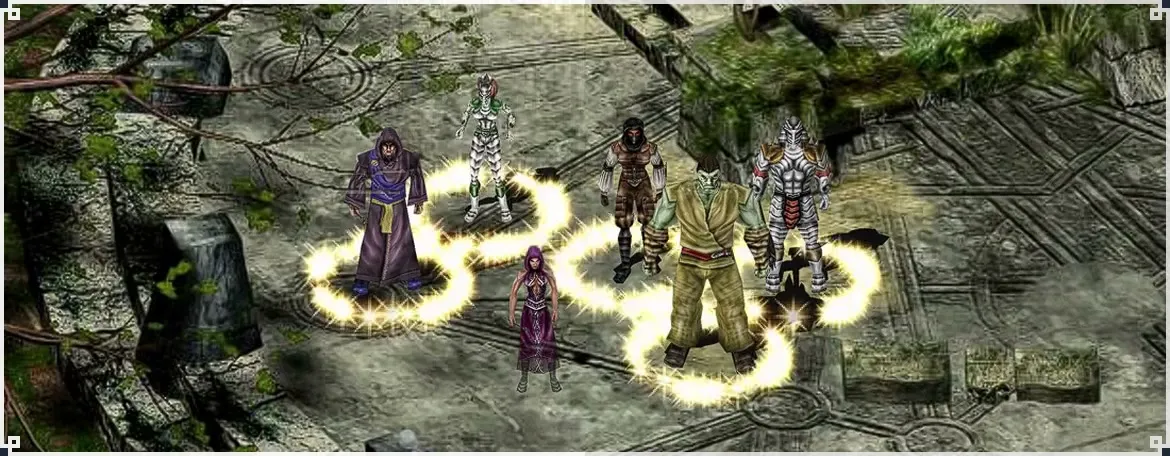
Which races fit the four-role template?
GameTruth lists racial adjustments aligned with D&D 3E: Dwarf +2 Con / −2 Cha, Elf +2 Dex / −2 Con, Half-Elf none, Half-Orc +2 Str / −2 Int / −2 Cha, Halfling +2 Dex / −2 Str, Human none. Unverified in the remaster: Tables may match 2001; we have not re-tested in-game.
Movement matters in contact fights: Dwarves and Halflings 20 ft; others 30 ft (GameTruth, 2026-11-06). A 20 ft Fighter needs to start closer or you’ll watch casters eat hits before melee connects.
A practical mixed team from the same guide:
- Human Cleric and Human Sorcerer (no casting penalties)
- Dwarf Fighter (extra Con after racial adjust)
- Halfling Rogue (Dex 18 after point buy and +2 Dex racial)
Half-Orc can boost melee Strength but punishes Rogue skills and Sorcerer Charisma—use on Fighters or Barbarians, not your core Rogue or Sorcerer.
How do you spend the 25 ability points?
Character creation starts every ability at 8, grants 25 points, and makes higher scores cost more at the top end: each step to 15 or 16 costs 2 points, each step to 17 or 18 costs 3 (GameTruth, 2026-11-06). Steps from 9 through 14 each cost 1 point per increase above 8—we verified that by reconciling GameTruth’s published arrays to exactly 25 points spent (same article, 2026-11-06). Unverified in the remaster: Whether the rebuilt UI shows identical costs.
Casting needs 10 + spell level in the casting stat (Wisdom for Cleric, Charisma for Sorcerer). Level-1 spells therefore need 11 in that stat before racial bonuses.
Example arrays before racial adjustments, each totaling 25 points (calculated from the point-buy rule reported by GameTruth (2026-11-06)):
| Class | Str | Dex | Con | Int | Wis | Cha |
|---|---|---|---|---|---|---|
| Fighter | 16 | 12 | 14 | 10 | 10 | 9 |
| Cleric | 10 | 10 | 14 | 9 | 16 | 12 |
| Rogue | 10 | 16 | 12 | 14 | 10 | 9 |
| Sorcerer | 9 | 14 | 12 | 10 | 10 | 16 |
Fighter check (25 points): 8→16 Str = six +1 steps and two +2 steps = 10; Dex 12 = 4; Con 14 = 6; Int/Wis 10 = 2 each; Cha 9 = 1; total 25.
With Dwarf (+2 Con, −2 Cha) on that Fighter row, post-racial Con is 16 and Cha 7. With Halfling (+2 Dex, −2 Str) on the Rogue row, Dex becomes 18 and Str 8—exactly what GameTruth highlights for a lock-focused Rogue.
GameTruth advises aiming for 16 in your primary stat before chasing 18, so Constitution and secondary skills still fit under the cap. Some spellcasting classes pre-allocate points into the casting ability; you may redistribute those (GameTruth; Unverified in the remaster UI).
Early Sorcerer spells the same guide names: Magic Missile and Mage Armor (no attack roll on MM; Mage Armor +4 AC without armor spell failure on cloth casters). Clerics auto-learn divine spells by level in the Original manual—Cure Light Wounds and Bless are called out for early fights.
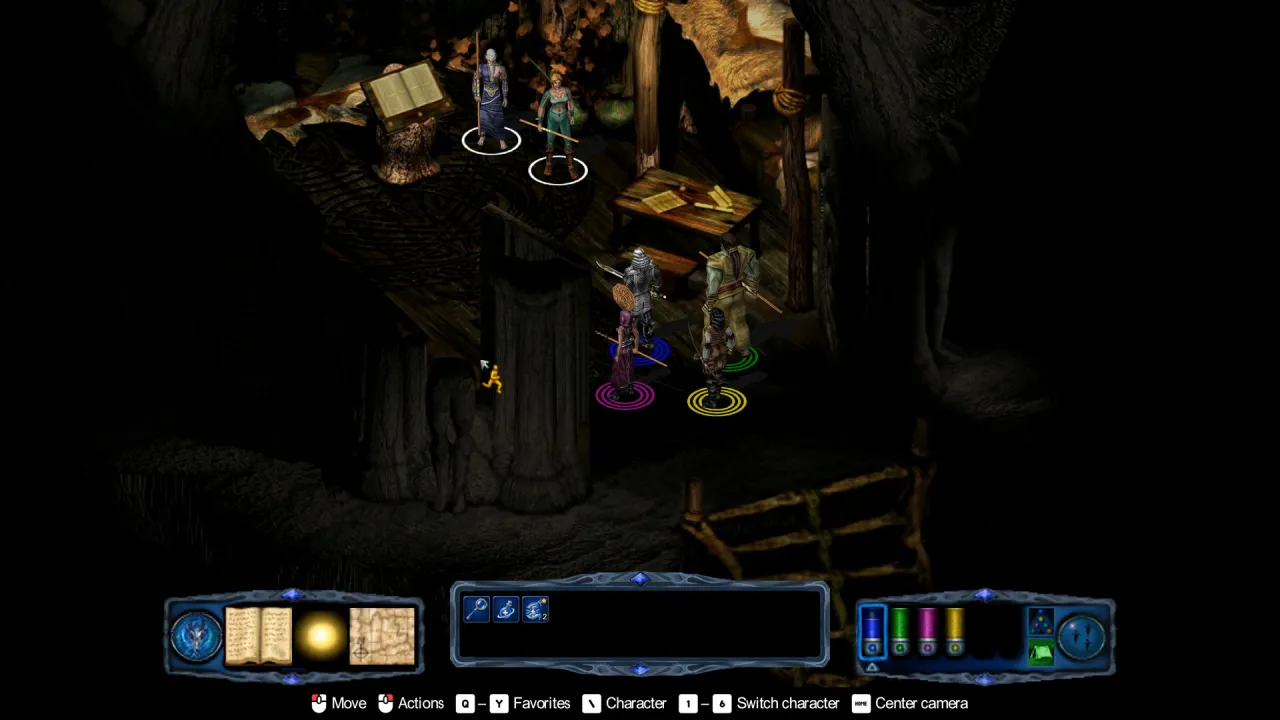
What settings and habits support this party?
Before diving in, skim /guides/beginner-guide/ for Legacy Mode versus modern UI and turn-timer advice. /guides/combat-settings/ covers round speed; many walkthroughs suggest disabling the timer until you know the action bar. None of that changes party composition, but it keeps your four-role team from fighting the interface.
Frequent saves help protect a low-HP Sorcerer in the rear (Original combat hints; Unverified in the remaster rest UI).
Sources and what we haven’t verified
Sources: Steam store Features (party size, 16-level cap, 90+ spells, 2026-11-07); GameTruth party guide (2026-11-06) for four-class template, racial table, point-buy costs, and sample arrays; Sorcerer’s Place FAQ (2001, checked 2026-11-07) for classes, party size, companion count; GameFAQs AIssil walkthrough (2002) for companion classes/levels—Original (2001) only; Manualzz OCR excerpts in romd-facts-F-classes.md for Rogue skills and hit dice.
Unverified in the remaster: Point-buy UI and pre-filled casting stats; companion recruitment levels and builds; XP penalty and multiclass behavior at 1.4 parity; GameTruth racial adjustments inside the remaster build; whether early-game balance still favors Turn Undead and low Sorcerer HP as in 2001 community memory.
Related Articles
classes
Best Class in Ruins of Myth Drannor: Role-by-Role Pick
Compare all eight classes in Ruins of Myth Drannor by party job—tank, healer, traps, and arcane output—using manual and FAQ sources.
classes
Cleric Build — Ruins of Myth Drannor
Cleric build guide for Pool of Radiance: Ruins of Myth Drannor—point buy, divine spells, Turn Undead, and party healing in the 2026 remaster.
classes
Fighter Build — Ruins of Myth Drannor
How to build a Fighter in Pool of Radiance: Ruins of Myth Drannor: stats, race picks, front-line role, and what the 2026 remaster still auto-assigns.
Was this helpful?
Thanks for the feedback!